

Behind the scenes: Plan & Quests
Here’s how we developed two of Pagebound’s one-of-a-kind features


“Don’t build a product for yourself” is common advice given to product developers. Who would want a tool you created for your own niche problem?
Pagebound, however, is built by readers for readers—which means we threw out this “wisdom” and addressed problems we personally experienced (and had a hunch many other readers did as well). By following this hunch, we built many unique features only fellow book lovers could dream up. Here’s the story of how two of them came to life.
Plan
One of our most-loved features started with a book buying problem and a funky bookshelf. I made the cannon mistake of buying too many books and started using my geometric bookshelf as an organizational tool to tackle my physical TBR. Each shelf represented a month, and I divided my books between the shelves to see how long it would take to read through my purchases. Rearranging the shelves and planning my reads turned into a hobby and a fun way to interact with my collection.
When we started building Pagebound, I wanted to digitize this experience, and Plan was born. While I still use Plan to organize my physical TBR, it’s also extremely useful for planning book club picks, readalongs, buddy reads, ARC deadlines, and upcoming releases.
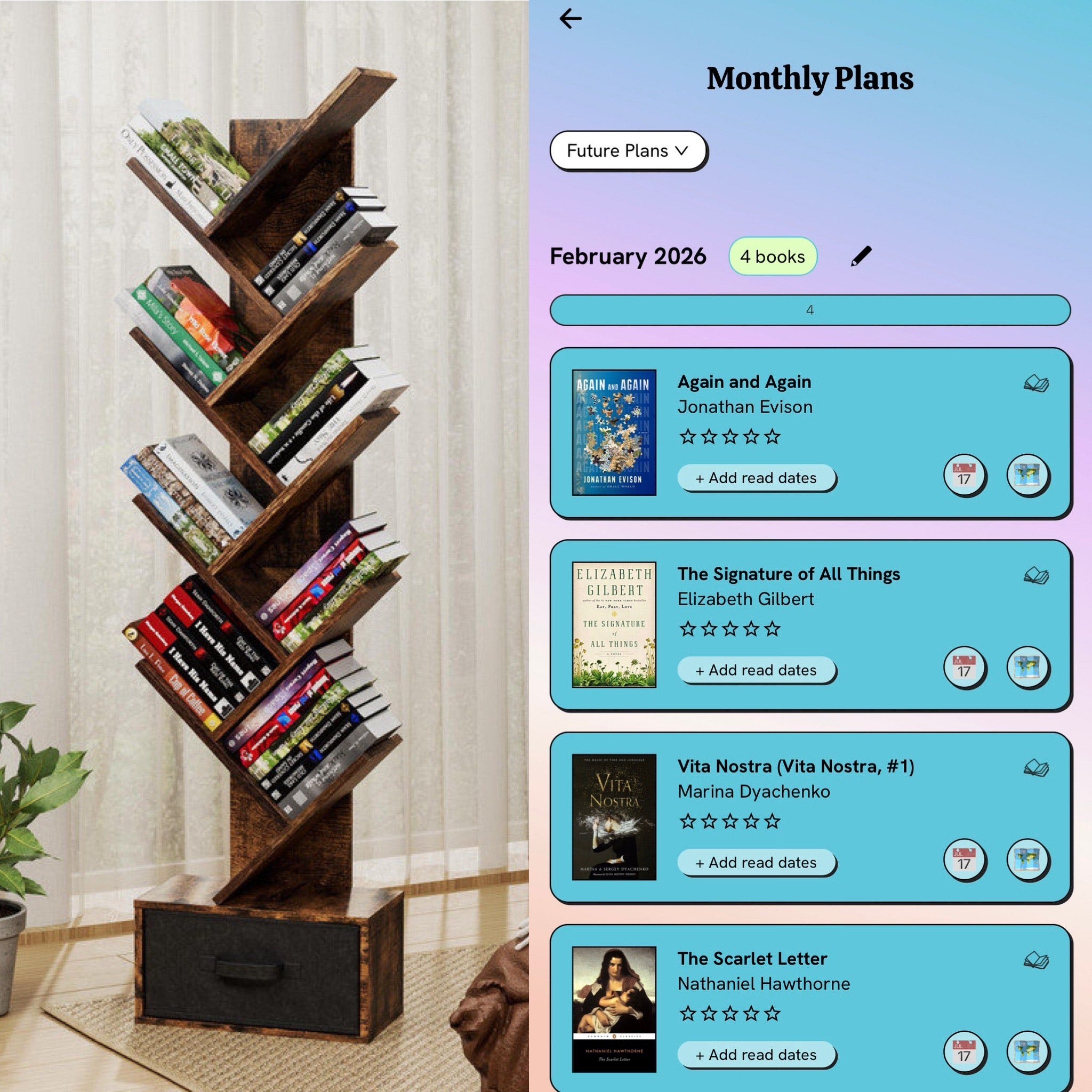
We have big ideas for Plan and intend to make it more social. For instance: suggesting buddy reads based on mutually planned books between friends, suggesting new releases from favorite authors in upcoming plans, and showcasing the most-planned books of the month.
Quests & Badges
There are so many reading challenges in the book community—alphabet challenges, prompt-based, read around the world—that are great in theory but difficult to complete in practice. Between the quantity of books required to complete something like an alphabet challenge and the work of finding interesting books to fit a prompt, the overwhelm kept me from actively participating.
Lucy and I found we were more likely to read through a pre-defined list, like the Booker Prize short list, and enjoyed seeing content from other readers like “how many of the NYT 100 best books of the year did you read?” We took inspiration from these experiences when designing Quests (Pagebound’s themed reading challenges), and decided early on they would be pre-selected book lists rather than prompts to cut down on decision fatigue and encourage book discovery.
In our very first version, Quests had a 10 book cap and you had to read them all to complete the challenge. Very quickly we realized this didn’t meet our needs; we love being in control of our TBR and never want reading to feel like homework, which can happen if you’re required to read a book to complete a challenge.
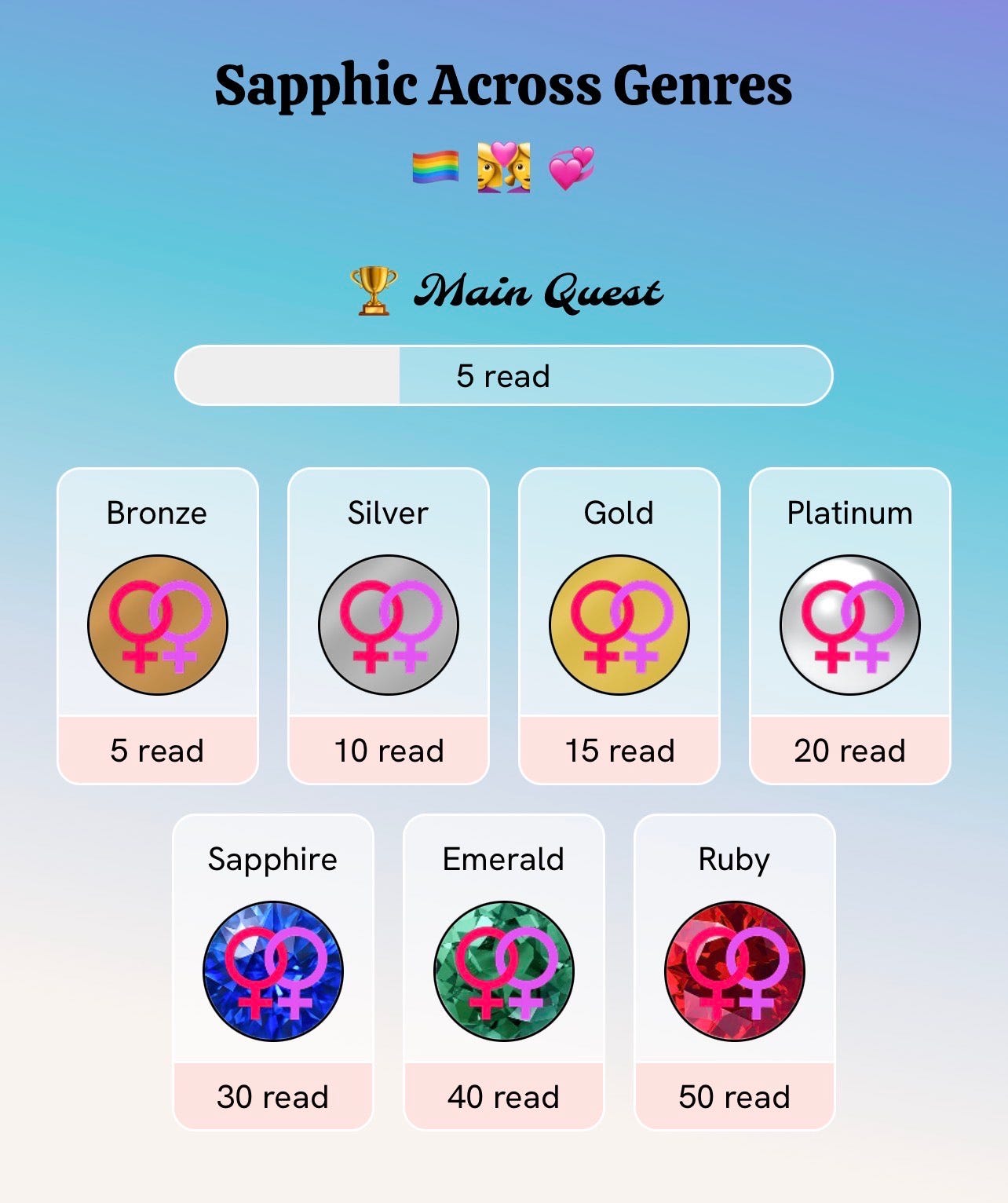
In our next iteration, we created a tiered badge system and dropped the 10 book max. It’s up to you how much you want to read and what badge tier you want to aim for— 5 books for Bronze, all the way up to 50 books for Ruby. Unless you’re gunning for a Completionist badge on a Side Quest (ultra-rare badges for those that read all the books in our shorter Quests), you do not have to read a book you’re not interested in to earn a badge.
The tiered badge system not only gave readers the flexibility to decide how much they wanted to invest in a challenge, but also gave us something Lucy and I (and, as it turns out, many other readers) desperately wanted: a way to show off how well-read we are in a niche 💅
The joy of earning the next badge in a beloved niche is often just the motivation we need to actually tackle our TBRs.
This is so cool, I love reading about yalls process
Thank you for the validation that organizing my owned books, and planning future reading is a hobby in itself 🤩👏